One of the most common questions about the stadium is what it would do to home values nearby. The honest answer is that the public data is thin. Here’s what we actually know, what we don’t, and how to think about it while the stadium decision is still up in the air.
What the numbers show
Arlington Heights was already a strong housing market before the Bears showed up. According to the U.S. Census Bureau, the village’s median owner-occupied home value is about $403,200, median household income is about $118,500, and about 73% of homes are owner-occupied.
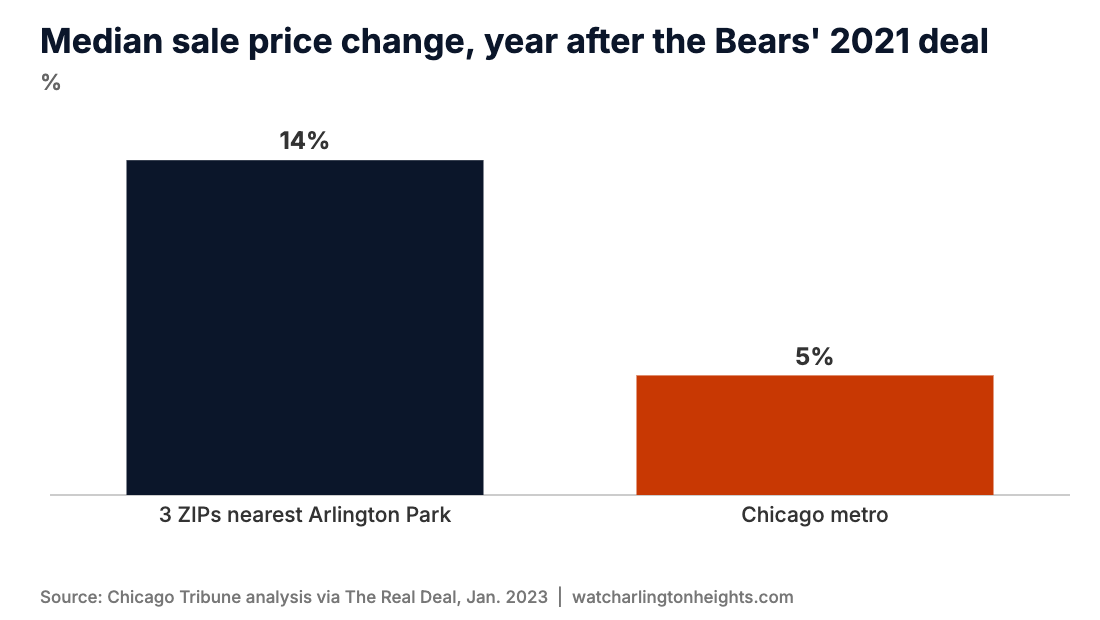
The one published look at a “Bears effect” came from a Chicago Tribune analysis, summarized by The Real Deal in January 2023. It found that median sale prices in the three ZIP codes closest to Arlington Park rose 14% in the year after the Bears’ 2021 purchase agreement, compared with 5% across the Chicago metro.
Why that number needs context
- Timing. The comparison covers 2021–22, when the whole housing market was surging and suburban demand was unusually strong.
- Other factors. Then-Mayor Tom Hayes credited the village’s schools and quality of life as much as the Bears for the trend.
- No recent data. I have not found a published analysis covering 2025 or 2026, the period when the Bears refocused on Arlington Heights and then on Hammond.
What a stadium could mean for nearby homes
A stadium district would bring two very different things. On one side: new restaurants, shops, hotels and about 1,150 planned apartments and townhomes, which could make the area more attractive and add housing supply. On the other: game-day and concert traffic, parking pressure, noise and lights. The Bears’ traffic study, which would show how cars and trains would move on event days, had not been delivered to the village as of March 2026.
Studies of other stadiums have found mixed effects on home prices, often depending on distance. Homes right next to a venue can feel the downsides most, while homes a mile or more away may benefit from new amenities without the traffic. There is no study specific to Arlington Park yet.
If you’re buying or selling
Since the move is not approved, any “stadium premium” in a listing price is speculative right now. Watch the veto session (November 17–19 and December 1–3) and, if a deal passes, the traffic study and site plan, which will show which streets get event traffic. I plan to dig into current sales data near the site in a follow-up post.